More Than a Vendor — How VIP AV Builds Production Partnerships
60% of corporate event planners named advanced AV a top 2026 priority. The Event Planner Expo published that one earlier this year, and it tracks with what we hear from planners every week. The gear conversation is louder than it's ever been.
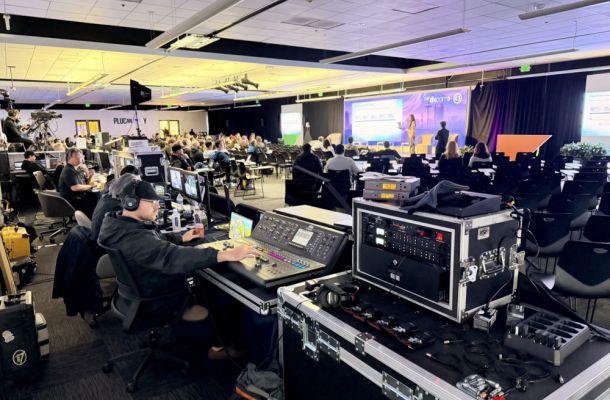
But what separates a partner from a vendor isn't the gear list. It's what happens between the first call and event day — the discovery work that runs before the quote, the production meeting that runs before truck day, and the way an AV team gets better at your program after we've been on a few of your events together. Here's what that actually looks like inside our shop.
What discovery actually looks like
A lot of AV estimates start with a form. You fill in audience size, room dimensions, AV needs in three checkboxes, and a number comes back. That's how a fast, transactional quote works. There's a place for it.
A production partner starts somewhere else. A thirty-minute call, with the planner doing most of the talking. We're asking about the run-of-show, the IT contact, the load-in dock, the column lines, the rigging points, whether the audience is hybrid or in-room. We're sizing crew and gear off the answers, not off the form.
When the venue is unfamiliar or the production has a real curveball — non-standard rigging height, a tricky room flip, high-end audio in a building that wasn't built for it — we'll ask to walk the venue with you. We don't walk every room before every quote. The walkthrough is the tool we reach for when it's going to change the answer.
Three questions to ask any prospective AV partner: Can we get on a call before you quote? Who from your team is there on event day? How do you size crew? If the answers come back vague, that's a signal.
Pre-con is where the partnership earns its keep
Discovery sets the frame. Pre-con — the production meetings in the run-up to event day — is where the partnership earns its keep.
Pre-con timing varies. Some planners schedule it three weeks out. Some get it on the calendar a week before. Some keep it loose and we sync as the show approaches. The date isn't the point. What matters is that the production partner walks the run-of-show with you, the venue's day-of contact, the speaker handoffs, and the room flip, before the gear arrives.
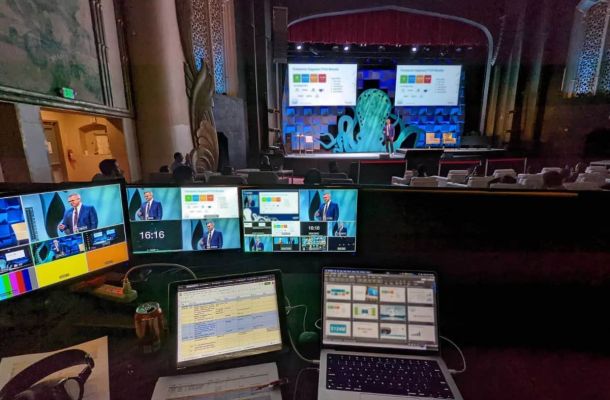
We're walking the speaker handoff that always gets tricky. Confirming the room-flip window between general session and breakouts is realistic against the agenda. Naming the venue IT contact who's actually going to answer at 7am on show day. Not theory. Specific decisions that get locked before the truck gets loaded.
Three pre-con checks you can run on your own: Is every speaker handoff timed in the run-of-show? Who's on speed dial from the venue side? Is the room flip realistic against the agenda? Where this gets unwieldy — multi-track agendas, room flips under thirty minutes — a partner pre-cons the gaps out before they cost you sleep.
From learning mode to ideas-and-support mode
Here's the part that takes longer than one event to show up.
The first event or two, we're absorbing. The program, the people, the building, the quirks. What your leadership wants out of the general session. Which speaker always runs over. The rooms you gravitate toward. The catering window that always runs late.
By event three or so, we've earned the right to bring ideas. What worked. What we'd try differently. What to keep. We start bringing those into the planning conversation as suggestions, not assertions. You still run the show. We get to help shape it.
What planners can expect from a maturing partnership: fewer "here's the brief again" emails. More "we'd try this differently next time" notes after the post-mortem. A partner who shows up with the IT contact already in their phone.
Planners who stick with us across multiple events tell us the planning overhead drops. That's the dividend. The building, the team, the quirks — that's institutional memory we built across your events, and you don't have to rebuild it each time.
Same model, different terrain: ballroom to Levi's Stadium
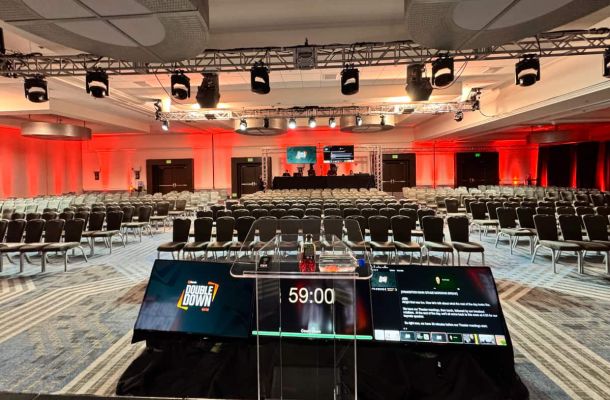
The same method that runs a 200-person product launch in a hotel ballroom runs at Levi's Stadium.
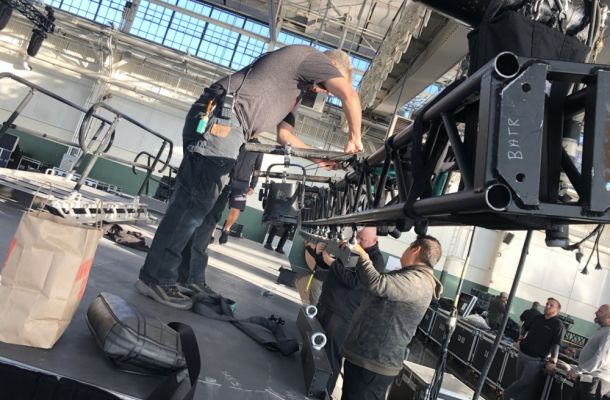
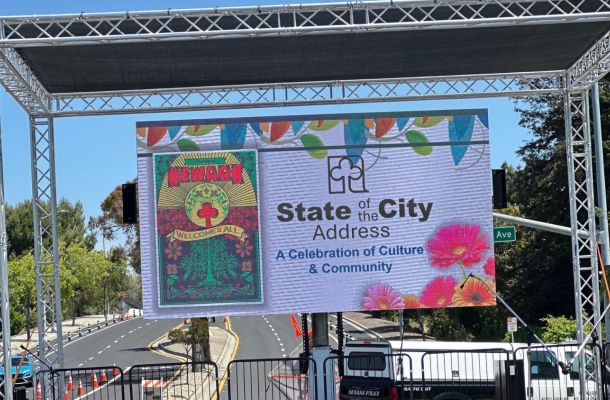
The starting questions don't change. What's the run-of-show? Who's the venue contact? What's the room-flip window? What does the load-in dock look like? At a corporate ballroom, the flips are minute-by-minute and the load-in is a freight elevator. At Levi's Stadium, the load-in window is tighter, the union shops are in the conversation from day one, and the rigging points are decided well in advance. The variables change. The method doesn't.
A partner who can run the same playbook at both ends saves you from running multiple vendor relationships across your year. One conversation, one team, one approach, at every scale your program lands at.
Where this leaves us
Partnership isn't a marketing word. It's the discovery that runs before the quote, the pre-con that runs before truck day, and the way an AV team gets better at your program after every event. If you're scoping a Q4 corporate program right now, this is the conversation we want to be in. Reach out and we'll get a thirty-minute call on the books.
FAQ
-
What's the difference between a production partner and an AV vendor?
A vendor quotes off a form. A partner runs discovery first — a thirty-minute call, leadership Q&A, format sizing, and a venue walkthrough when it'll change the answer — then stays in the room through pre-con and event day.
-
What happens during AV discovery?
A thirty-minute scoping call where we ask about run-of-show, IT contact, load-in dock, rigging points, and whether the audience is hybrid. If the venue is unfamiliar or the production has a curveball, we'll walk it with you. We size crew and gear off the answers, not off the form.
-
What changes after we work with the same AV partner for several events?
By event three or so, the partner has absorbed the program, the people, and the building. Planning overhead drops because the partner brings ideas from past events into the conversation — what worked, what to try differently.
-
Does the partnership model scale to stadium-scale events?
Yes. The same method that works in a corporate ballroom holds at Levi's Stadium. The variables change — tighter load-in, union shops in the conversation from day one — but the partnership method is the same.